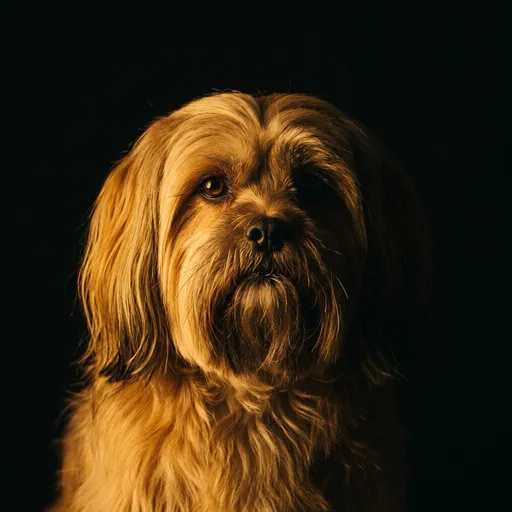
Lhasa Apso · Non-Sporting Group
The Lhasa Apso Wall
The wall is forming · Be among the first families to add yours
Those who have crossed
Ming
February 2009 – October 2023
The same window perch surfaces in photos across fourteen years
Example
Tashi
July 2011 – January 2024
One person appears in every photo — the chosen one was always clear
Example
Pepper
March 2010 – September 2022
Grooming photos reveal a coat that changed through twelve seasons
Example
Lotus
November 2008 – May 2023
The front door appears in more photos than any other location
Example
Simba
January 2012 – August 2024
A particular blanket finds its way into photos spanning a decade
Example
Pages marked 'example' are demonstration bridges showing what a memorial looks like — not real families. The small lines beneath each are examples of what Memory Weather surfaces over time.
Remembrance
Lhasa Apsos were ancient souls in small bodies — the monastery sentinels who carried themselves with a regal bearing that had nothing to do with size and everything to do with a thousand years of knowing exactly who they were. They watched the door. They assessed every visitor. They decided, on their own terms, who was worthy of their attention.
The devotion was underneath the independence, not instead of it. A Lhasa Apso loved deeply but showed it on their schedule, in their way — a head laid on your foot, a rare moment of softness after a long day of judging everything else in the room. You had to earn it. And once earned, it never wavered.
“She looked at most people the way a queen looks at someone who forgot to bow. But at night she slept pressed against my ribs, and that was the whole truth of her.”
What to remember
When you create a bridge, these prompts help you hold the details that matter most — the ones that fade first.
How did they greet you versus how they greeted a stranger? Describe the difference — the suspicion for one, the quiet recognition for the other.
What was their judgment like? Who did they refuse to warm up to, and were they ever wrong about someone?
What was the funniest thing about their stubbornness — the command they understood perfectly and chose to ignore?
Where was their sentinel post? The exact spot they chose to watch the door, the hallway, or the room.
What would a stranger notice first — the flowing coat, the unblinking assessment, or the bark that came from a much larger dog?
When you were sad or unwell, did they break character? Did the regal sentinel become something softer, or did they guard you in a different way?
Words that stayed
“She weighed fourteen pounds and her coat touched the floor and she walked through every room like she had founded it.”
physical
“He barked at the UPS driver every single day for thirteen years. On the one day the driver changed, he knew immediately. He was right to bark.”
funny
“The door has no one watching it now. We lock it every night, but that is not the same thing as having someone who knew who belonged on the other side.”
absence
“She decided who was worthy. Most people were not. The ones who were knew it was the highest compliment they had ever received from any living thing.”
character
“Fourteen years of earned devotion. She was suspicious of everyone except us. We were her monastery.”
time
The math
Lhasa Apsos typically lived 12–15 years.
Kidney disease was the most significant health concern in aging Lhasa Apsos, often progressing quietly beneath the flowing coat. Cherry eye, patellar luxation, and dry eye were also common in their later years. The breed's stubbornness extended to their health — they often masked pain and decline with the same regal composure they brought to everything else.
If your Lhasa Apso is in their senior years, start their bridge now — while the specific judgments, the sentinel routines, and the rare moments of softness are still happening daily.
Start their bridge now →The shape of this loss
They were ancient souls — the watchfulness, the judgment, the way they decided who was worthy. The door feels unguarded now. Not unsafe, exactly. But unmonitored in a way that no lock or alarm replicates. A Lhasa Apso knew who belonged and who did not, and that knowledge left with them.
The grief is quieter than some breed grief, and that makes it harder to explain. A Lhasa did not greet everyone with joy. They did not perform affection for an audience. The bond was private, deliberate, and total — and losing it feels like losing a secret that only two of you knew.
The house still stands. The door still opens. But no one is assessing who comes through it anymore.
The door feels unguarded now.
Memory Weather
How a bridge deepens with timeOver time, WenderBridge surfaces patterns already present in the photos and memories you choose to keep here.
Your Lhasa's photos reveal one consistent vantage point — the spot where they could see the door without being in the middle of the room.
Memory Weather notices the coat. The grooming photos, the topknots, the seasonal trims — a timeline of care that spanned their entire life.
One person surfaces more than any other in the photos. The Lhasa chose, and the photos confirm who was chosen.
Memory Weather is available with Full settings.
Questions families ask
Add your Lhasa to the wall
Every Lhasa Apso who stood watch — in a monastery or a living room, for monks or for a family of four — deserves a permanent record of their vigilance. Their bridge is free to create, free to visit forever, and free to share.
Celebrating a living Lhasa Apso?
If your Lhasa is currently stationed at their post, assessing the worthiness of everyone who walks past the window, WenderPets is where you'll find the sculptures, lamps, and gifts made just for them.
WenderPets →Lhasa Apso bridges are hosted permanently and will never disappear.