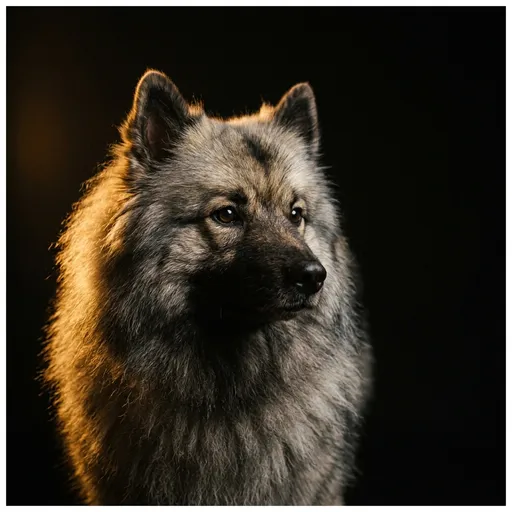
Keeshond · Non-Sporting Group
The Keeshond Wall
The wall is forming · Be among the first families to add yours
Those who have crossed
Koda
March 2009 – November 2022
The same person's lap appears in photos across thirteen years
Example
Elsa
October 2011 – January 2024
The 'spectacles' markings frame every expression differently — Memory Weather found forty-seven distinct smiles
Example
Remy
June 2010 – April 2023
Winter photos outnumber summer three to one — the coat loved the cold
Example
Nimbus
August 2012 – September 2024
A silver ruff deepening year over year — the same dog growing distinguished
Example
Duchess
February 2008 – July 2022
The front window appears in every season — she watched for someone all her life
Example
Pages marked 'example' are demonstration bridges showing what a memorial looks like — not real families. The small lines beneath each are examples of what Memory Weather surfaces over time.
Remembrance
Keeshonden are remembered for the smile — the actual, physical, breed-specific grin that no other dog does quite the same way. That face, framed by the spectacle markings like a dog permanently wearing reading glasses, turned every greeting into something that looked like genuine delight. Because it was genuine delight. A Keeshond saw you and smiled, and there was nothing ironic about it.
They were shadows. Not in a melancholy way — in a literal one. A Keeshond was wherever you were, always. They followed from room to room with a quiet persistence that felt less like neediness and more like a job they had assigned themselves. When the shadow disappears, the rooms feel larger than they should.
“People always asked if she was smiling. She was. Every single time. That was just her face when she was near someone she loved, which was everyone, but especially us.”
What to remember
When you create a bridge, these prompts help you hold the details that matter most — the ones that fade first.
Describe the smile. When did it appear? What did their face look like when they saw you specifically?
Which room were they always in? Was it the room, or was it wherever you happened to be?
What did they do during grooming — the big coat sessions? Did they enjoy it, tolerate it, or have a specific opinion about the undercoat rake?
What was their position on cold weather? Describe the first snowfall behavior.
What did strangers notice first — the coat, the spectacles, or the smile? What did people always ask?
How did they respond to tension in the house — an argument, stress, someone crying? Did they insert themselves, or just get closer?
Words that stayed
“Twenty-eight pounds of silver and gray with spectacle markings that made her look perpetually curious about everything, which she was.”
physical
“He spun in circles before every meal for fourteen years. Not small circles. Full rotational events. He never once considered stopping.”
funny
“She followed me to every room for thirteen years. Now I walk through the house and no one follows. The rooms are the same size but they feel enormous.”
absence
“He smiled. An actual smile. People thought we taught him that. We didn't. That was just his face when he was happy, which was whenever we were home.”
character
“Fourteen years. Long enough to forget what the house felt like without her. Now we are remembering, and we don't want to.”
time
The math
Keeshonden typically live 12–15 years.
Keeshonden are relatively healthy, though hip dysplasia, patellar luxation, and epilepsy can appear. Some develop Addison's disease or mitral valve issues in their senior years. The breed's long lifespan means they embed themselves deeply into every routine — and the disruption of their absence touches more years of habit than shorter-lived breeds.
If your Keeshond is in their senior years, this is the right time to start their bridge — while the specific memories are still sharp.
Start their bridge now →The shape of this loss
Keeshond families grieve the shadow. The constant, quiet presence that followed them from kitchen to bedroom to bathroom — always there, never demanding, just near. When a Keeshond is gone, you walk through your house and realize you have been moving through it with a companion for over a decade, and now you are moving through it alone.
The breed is rare enough that most people don't know what you lost. You find yourself explaining both the dog and the breed in the same sentence of grief — 'she was a Keeshond, a Dutch barge dog, they smile, she smiled all the time' — and the explaining makes it harder, because the person listening has no frame of reference for what you're describing.
A Keeshond's absence is measured in silence and in the absence of following. It is the specific grief of losing a companion whose entire purpose was to be near you.
A Keeshond's absence is measured in silence and in the absence of following.
Memory Weather
How a bridge deepens with timeOver time, WenderBridge surfaces patterns already present in the photos and memories you choose to keep here.
Your Keeshond's photos reveal the spectacle markings framing a different expression in every shot — but the smile appears in nearly all of them.
Memory Weather notices the proximity. In photo after photo, the Keeshond is within arm's reach of the same person.
The winter photos tell a story — more energy, deeper coat, a dog built for cold who came alive in it.
Memory Weather is available with Full settings.
Questions families ask
Add your Keeshond to the wall
Every Keeshond who smiled through a doorway and followed their person from room to room deserves a permanent home on the wall. Their bridge is free to create, free to visit forever, and never behind a paywall.
Celebrating a living Keeshond?
If your Keeshond is currently grinning at you from across the room with those spectacle markings and zero intention of being more than three feet away, WenderPets has the sculptures and gifts made for them.
WenderPets →Keeshond bridges are hosted permanently and will never disappear.